


Why a template website isn't always a bad solution
Post date: 11 February 2026
3 minutes
A template website is often perceived as a compromise or a "cheap option" that supposedly harms a business. In practice, things are not so clear-cut. For many companies, a template-based website is a rational, fast, and cost-effective solution that allows them to launch a project without unnecessary costs and risks.
In this article, we'll explore what a template website is, when it's appropriate, its advantages and disadvantages, and why a ready-made website template can be a great start for a business.
💡 What is a template website in simple terms?
A template website is a website created using a pre-existing design and structure. Instead of developing from scratch, a pre-built theme or layout is used, tailored to the needs of a specific business.
Essentially, it's a professionally designed framework:
- ready-made page structure;
- responsive design;
- basic SEO optimization;
- mobile version;
- ready-made blocks and interface elements.
The template is customizable: colors, text, images, blocks, and page logic can be changed. The result is a customized website, but with a reduced timeframe and budget.

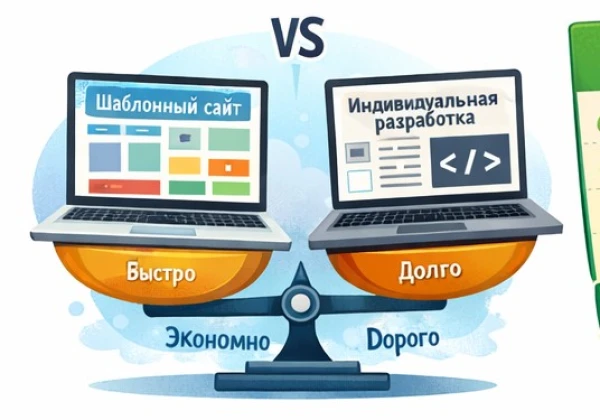
Template website vs. custom development
⚖️ What is the difference between a template website and custom development?
The main difference is the starting point.
A custom website is created from scratch: design, logic, architecture.
A template-based website takes an existing foundation and refines it.
It's not a "copy of someone else's website," but a faster development model.
A template is not a simplification of quality, but an optimization of resources.
🎯 When a template website is the right solution
A template website is especially effective in situations where speed and budget are important.
It's suitable if:
- a business is just starting out;
- needs to test a niche;
- needs an MVP website;
- limited budget;
- needs a quick project launch;
- a temporary website for a promotion or startup;
- a website for a small business;
- a landing page on a template for advertising.
The ideal principle for starting a business is: first a working website → then scaling.
✅ Advantages of template sites
1. Quick Launch
A ready-made structure allows you to launch a website much faster. Sometimes a project can be launched in days instead of months.
2. Budget Savings
A template website is a budget-friendly website for businesses without sacrificing functionality. The money can be invested in advertising and promotion.
3. Proven UX
Popular themes are developed with user experience in mind. These ready-made solutions offer easy navigation and conversion.
4. The SEO foundation is already laid
High-quality templates are optimized for:
- Loading speed;
- Mobile devices;
- Page structure;
- Google indexing.
This is a significant advantage for promotion.
5. Scalability
A website built on a template can be further developed. Many projects start with a template and later evolve into full-fledged platforms.

Pros and cons of a template website
❌ Disadvantages of template websites
It's important to be honest—there are no perfect solutions.
Cons:
- Limited design uniqueness;
- Excessive theme features;
- Dependence on the CMS and template;
- Difficulty implementing unconventional ideas.
However, for most business tasks, these limitations aren't critical.
A template is a tool, not a development ceiling.
Myths about template websites
Myth 1: A template website doesn't promote well
False. SEO depends on the structure, content, and optimization, not on whether it's a template or a custom website.
Myth 2: All template websites are the same
After customization, websites look unique. Most users won't be able to distinguish a template from a unique design.
Myth 3: It's unprofessional
Many large projects started with templates. The important thing is the result, not the method.

Myths about template websites
💼 A Template Website for Business: A Rational Approach
Businesses value:
- speed to market;
- return on investment;
- minimal risks;
- a working sales tool.
A website template solves these problems.
It's not a "cheap website," but rather a way to optimize budget and time.
It's much more profitable to quickly launch a website, gain clients, and scale than to wait months for the perfect design.
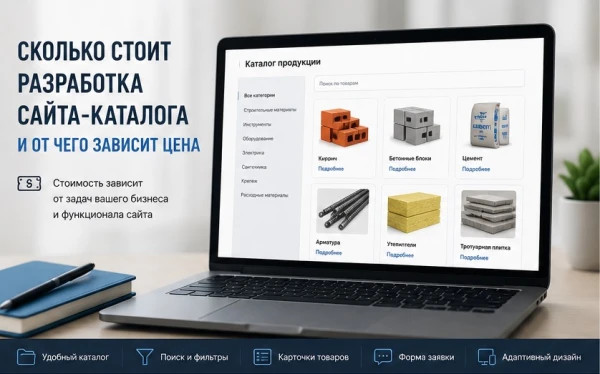
💸 How much does a template website cost?
The price of a template website (i.e., a website based on a ready-made template customized for your business) depends on many factors, but here are some approximate figures for Ukraine in 2025–2026 👇
Approximate Prices
🔹 Template Website (simple business website/business card):
- from ~15,000–20,000 ₴ (≈ €300–400) — a basic website based on a template without complex customization;
The most common offers from studios are from ~$500 to ~$2,000 for a fully prepared website with template customization and basic SEO;
🔹 Average Template Website with Customization:
- equivalent to ~$800–$1,500+, depending on the page size, content, and design;
🔹 Expensive options / studio solutions:
Some agencies quote the average cost of a template website at approximately $1,800, but the price can be higher depending on the functionality;
📊 How the price is determined
The cost is influenced by:
- The level of template customization – simply changing colors and text is cheaper than redesigning blocks;
- Functionality – blog, forms, integrations, SEO optimization;
- CMS or platform – WordPress, Tilda, Wix, etc.;
- Design and UX – a ready-made look without changes or adaptation to your brand;
✅ Helpful tip: If you need a website to start a business or test a niche, a template website is the fastest and most cost-effective solution. If you need a unique design/functionality and a strong brand, larger budgets can be justified today.
🆚 Template or custom development: which is better?
There's no universal answer.
A template is better if:
- a quick launch is needed;
- budget savings are important;
- the project is a test;
- a standard business model.
Custom development is better if:
- the architecture is complex;
- the functionality is unique;
- the project is large-scale.
For most companies, the logical path is:
template → growth → custom scaling.
🏁 Conclusion
A template website isn't a compromise, but a strategic launch tool.
It allows you to:
- quickly enter the market;
- cut costs;
- test hypotheses;
- start sales;
- lay an SEO foundation;
- scale without risk.
The key isn't the template itself, but professional setup, customization, and a well-designed structure.
A well-designed website with a template performs better than an expensive website without a strategy.






 flaviy2012@gmail.com
